
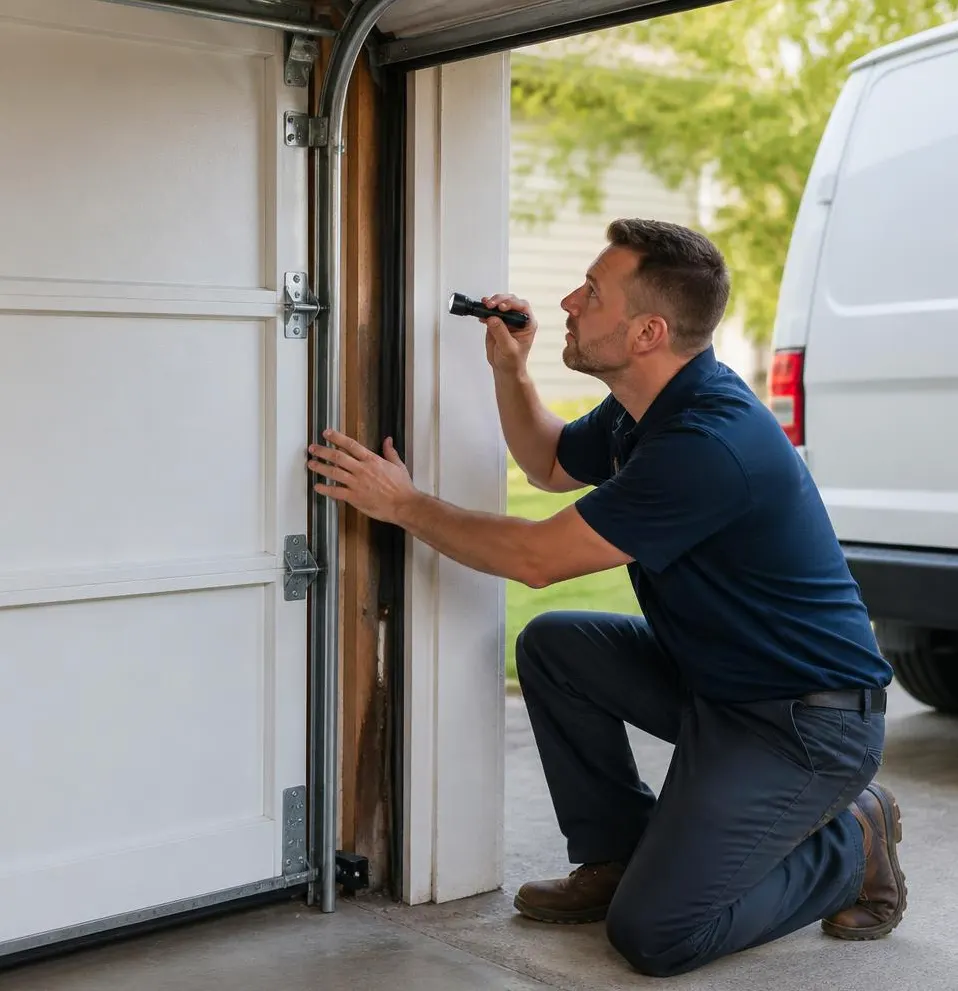
Here's a typical call: a homeowner says the garage door has been "grinding" for weeks, but it still opens and closes, so nobody's worried. A technician shows up, lifts the door a few inches by hand, and points a flashlight at the cable drums. One cable has three or four thin wires sticking out like a frayed shoelace. The rollers are cracked and flat on one side from years of hot summers and freezing winters. Both problems were making noise. Only one of them was about to let the door fall.
If you and your spouse have been going back and forth about whether that noise is "fine" or "an emergency," here's how to tell the difference.
Two different parts, two different jobs
Garage doors have more moving parts than most people realize, and two of the most overlooked are the lift cables and the rollers.
- Lift cables are the thin steel cables attached to the bottom corners of the door. They work with the springs to take the door's full weight off your hands. If a cable fails while the door is up, that side of the door drops suddenly and unevenly — sometimes all at once.
- Rollers are the small wheels, usually nylon or steel, that ride inside the track and let the door glide up and down. Worn rollers cause noise, jerky movement, and track wear, but they don't usually cause a sudden, dangerous drop.
So when someone says "it's just the rollers," they might be right — or they might be looking at the wrong part entirely while the cable frays a few inches away.
What each problem actually sounds like
Worn rollers tend to produce a steady grinding, squeaking, or rumbling sound that gets louder over time, especially as the door reaches certain points in the track. The door may also shudder or vibrate as it moves.
A damaged cable sounds different. Listen for:
- A popping or snapping noise, especially near the top of the door's travel
- A sudden clunk as the door opens or closes
- The door sitting slightly crooked, with one corner lower than the other
- Visible frayed strands near the bottom bracket or around the drum at the top
If the door looks even slightly off-level, or one side seems to be struggling more than the other, that's cable territory, not roller territory — and it's not a wait-and-see situation.
Why this shows up more right now
Heading into late fall and winter in this part of Ohio, both problems get worse at the same time. Cold temperatures make steel cables and springs stiffer and more brittle, so a cable that was already fraying is more likely to finally give out on a frigid morning. Road salt and winter moisture tracked into the garage speeds up rust on cables, drums, and roller stems. Meanwhile, nylon rollers that spent all summer expanding and contracting in the heat often enter winter already cracked, and the cold makes that plastic even more brittle.
It's a predictable pattern: the same big seasonal swings that define weather here — hot, humid summers followed by icy, salty winters — are hard on both parts, just in different ways. Rollers wear out from heat and grit. Cables weaken from rust, cold, and repeated stress.
What happens if you ignore it
Worn rollers that are left alone will keep getting louder, then start jumping the track, then eventually bind up the door entirely or damage the track itself. It's a slow failure — annoying, then inconvenient, then a repair bill that's bigger than it needed to be.
A fraying cable is a different kind of risk. Garage doors are heavy — often well over a hundred pounds — and the springs and cables work together to manage that weight safely. When a cable snaps, the door can tilt hard to one side, jump off its track, or drop suddenly. That's not just a repair issue; it's a safety issue, especially if anyone is standing underneath or a car is halfway in or out.
What's safe to check yourself
You can settle part of the argument without any tools:
- With the door fully closed, look at the cables near the bottom corners for fraying, kinks, or rust.
- Check whether the door sits level, or if one side looks lower than the other.
- Spin a roller by hand (door closed, opener unplugged) and see if it's cracked, flat-sided, or wobbly on its stem.
- Listen for where in the door's travel the noise happens — consistently, or only at one spot.
What's not safe to do yourself: touching, adjusting, or trying to replace cables or springs. They're under heavy tension, and even a small mistake can cause sudden, forceful movement. Rollers are a lower-risk fix for a confident DIYer, but if you're not sure which part you're even looking at, it's worth having it looked at properly.
When to call Toledo Garage Door Service
If you've spotted frayed strands on a cable, a door that hangs crooked, or a sudden pop-and-clunk sound, that's a same-week call, not a someday project. We'll inspect the cables, drums, and springs together, since they all work as one system, and handle spring replacement or cable repair safely. If the noise is coming from worn, cracked rollers instead, our maintenance and tune-up service replaces them and lubricates the whole track system so the door runs quietly through the winter ahead.
Whichever one of you is right about the noise, let's find out for sure before the weather turns colder. Call Toledo Garage Door Service today and we'll get it sorted — fast, honest, and done right the first time.